


Black-and-white wildlife photography remains one of the most effective ways to bring nature into an interior. It is direct, neutral, and visually strong. Without color competing for attention, the subject becomes the focus.
That makes monochrome nature wall art especially useful for collectors, homeowners, and interior designers. A black-and-white wildlife print can create a focal point in a living room, add structure to an office, or bring a calm visual rhythm to a hospitality space.
When I evaluate wildlife photography for a room, I look at three things first: the subject, the composition, and the relationship between light and shadow. Those elements determine whether an image feels quiet, dramatic, graphic, or atmospheric.
Why monochrome wildlife photography works
Color can communicate place and season. Black and white communicates form.
Removing color makes the eye pay closer attention to:
- Stripes, feathers, fur, scales, and skin
- The direction of light
- Negative space around the subject
- Repeated patterns and shapes
- The relationship between highlights, mid-tones, and deep shadows
Wildlife is particularly well suited to this approach because many animals already have strong visual structure. Zebra stripes, a goose’s feather pattern, or tangled mangrove roots can become graphic elements as much as documentary details.
The best monochrome images are not simply color photographs with the saturation removed. They depend on tonal separation. A dark subject against a light background creates a different mood from a pale subject surrounded by deep shadow. The contrast, texture, and composition need to work together.
This is why black-and-white animal wall art can feel both timeless and contemporary. It does not depend on a passing color trend, and it can work with warm wood, white walls, concrete, natural textiles, or bold accent colors.
Choose the composition before the room
The subject type should guide your choice of artwork.
Wildlife portrait
A portrait isolates the animal and creates a direct visual relationship with the viewer. This format works well when you want the artwork to feel personal, focused, and quietly powerful.
Portraits are effective above a console, in a study, at the end of a hallway, or in a smaller room where a complex environmental scene may feel too busy.
Group composition
A group creates rhythm and movement. Multiple animals can lead the eye across a wall and work especially well in a horizontal space above a sofa, credenza, conference table, or reception desk.
Group compositions also make strong standalone pieces because the repeated forms create a natural visual pattern.
Environmental or underwater scene
An environmental photograph shows the relationship between the subject and its surroundings. It gives the viewer more space to explore and often creates a slower, more atmospheric effect.
This type of image suits living rooms, hospitality interiors, wellness spaces, and gallery walls where the goal is to create depth rather than a single point of focus.
A group composition for a strong focal wall
Three Zebras Black and White Aluminum Print by Robert Moss - Wildlife Photography Art presents three zebras in South Africa as a bold horizontal composition. The repeated stripes create movement across the frame, while the dark background gives the animals clear separation.

This is the kind of wildlife photography print that can anchor a room without introducing another color into the palette. The composition has enough contrast for a modern interior, but the subject remains recognizably natural rather than purely abstract.
The print is made on 3mm Aluminum DIBOND® with a direct print, matte glare-free finish. It is UV- and moisture-resistant, and a hanging kit is included. Available sizes include 20x30 cm, 40x60 cm, and 60x90 cm. The artwork starts at $60.
For a horizontal wall, choose a size that extends across a meaningful portion of the furniture below it. A small print can work in a narrow entryway, while a larger format is better suited to a living room, office, or hospitality feature wall.
SHOP THREE ZEBRAS BLACK AND WHITE ALUMINUM PRINT
A wildlife portrait for quieter interiors
Canadian Goose Portrait Aluminum Print - Black and White Nature Photography by Robert Moss uses a close portrait to emphasize shape, feather texture, and the contrast between the goose’s dark head and lighter body.

The portrait format works when you want animal wall art to feel focused rather than expansive. It can add character to a home office, library, bedroom, hallway, or boutique hospitality space without overwhelming the rest of the interior.
This print is produced on 3mm Aluminum DIBOND® with a matte, glare-free direct print. It is UV-, moisture-, and scratch-resistant, and includes a professional hanging kit. Available sizes include 20x30 cm, 40x60 cm, 60x90 cm, and 70x100 cm. The artwork starts at $60.
The larger vertical sizes can provide a strong anchor on a tall wall. Smaller sizes are useful in a series of monochrome works, provided the surrounding pieces share a consistent visual treatment.
The portrait’s strong tonal structure and visible feather texture give it a clean, focused presence that works especially well in quieter interiors.
SHOP CANADIAN GOOSE PORTRAIT ALUMINUM PRINT
Environmental scenes add depth and atmosphere
Under the Mangroves Black & White Aluminum Wall Art by Robert Moss takes a different approach. The photograph shows the Mexican coastline and mangroves, with beams of light passing through the roots and illuminating the rocks below.
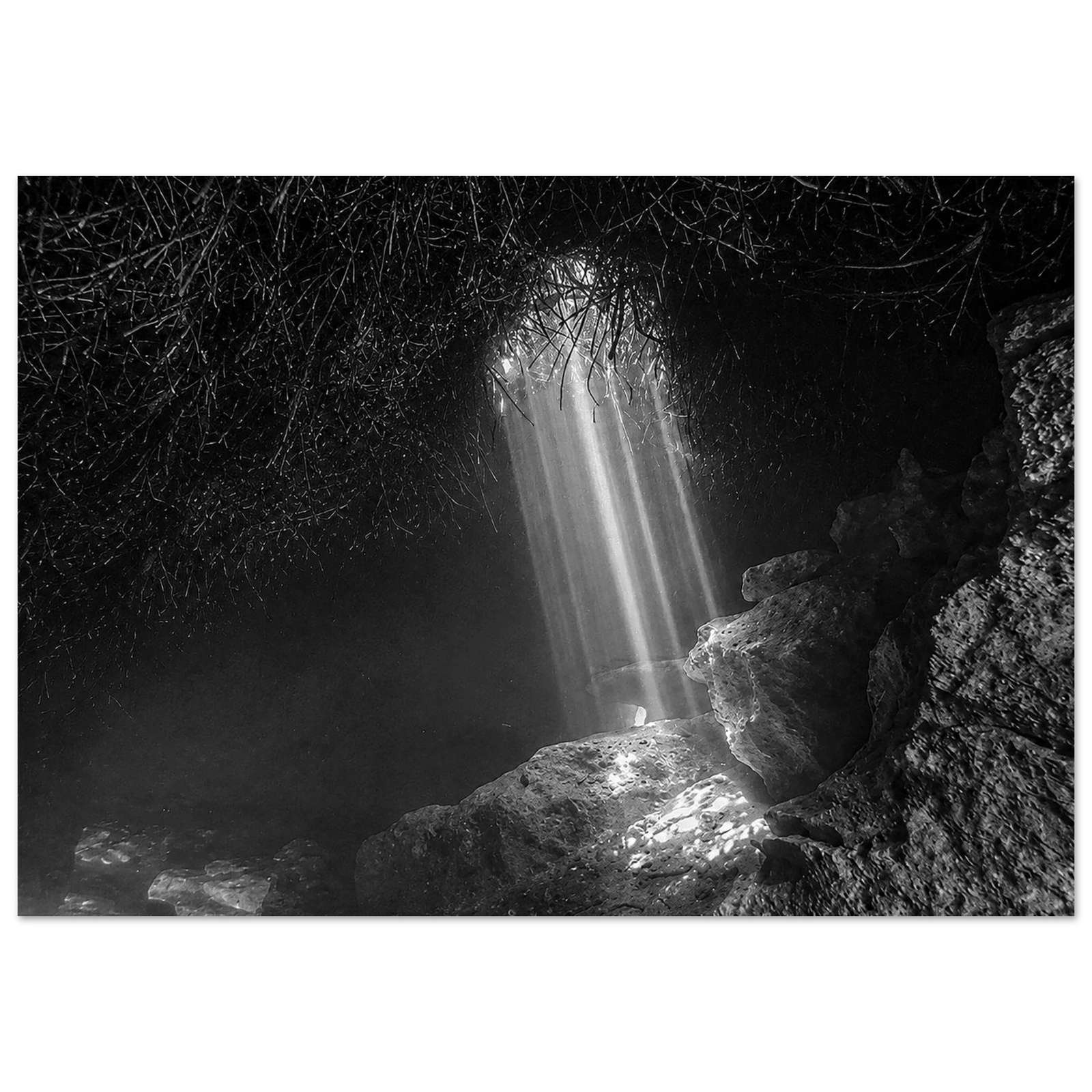
This is environmental wall art rather than a direct animal portrait. The roots create a dense upper frame, while the light forms a visual path into the scene. The result is atmospheric and immersive, making it a good choice for a living room, office, hotel, restaurant, or gallery wall.
Environmental photography can also help a room feel larger. Receding light, layered textures, and open areas of shadow create visual depth. In a commercial interior, that depth can make a large wall feel considered without making the space feel crowded.
The artwork is printed directly on 3mm Aluminum DIBOND® with a matte, glare-free finish. It is UV- and moisture-resistant and arrives with a hanging kit. Available sizes include 20x30 cm, 40x60 cm, 60x90 cm, and 70x100 cm. The artwork starts at $60.
SHOP UNDER THE MANGROVES BLACK & WHITE ALUMINUM WALL ART
How matte aluminum affects the display
Lighting can change how wall art reads. Glossy surfaces may reflect windows, overhead fixtures, or accent lighting. A matte, glare-free aluminum finish helps keep the image easier to view from different positions.
That does not mean the artwork should be placed without considering light. Avoid direct sunlight when possible, and check the wall at different times of day. In an office or hospitality setting, look carefully at ceiling lights and nearby windows before final installation.
Aluminum also gives monochrome photography a clean, contemporary presentation. The rigid 3mm panel has a slim profile, while the direct print preserves crisp edges and contrast. This makes it a practical option for modern interiors, professional environments, and gallery-style displays.
How to choose the right scale
Use the wall and furniture as your guide.
- For a narrow wall or small entryway, consider a smaller portrait format.
- Above a sofa, sideboard, or desk, choose art that has enough width to relate to the furniture below it.
- For a large blank wall, use one substantial statement piece or create a structured grid.
- In a gallery wall, keep the frame or presentation style consistent so different subjects still feel connected.
- Use group compositions for horizontal walls and portraits for vertical spaces.
- Choose environmental scenes when you want atmosphere, depth, and a slower visual experience.
Before ordering, measure the wall and mark the intended artwork dimensions with painter’s tape. This simple step shows whether the selected size will feel balanced.
All three Moss Fine Art works are available through the Moss Fine Art photography collection. Purchases also support the broader conservation mission of Moss Apparel: 10% of profits are donated quarterly to conservation partners. Free shipping is available on purchases over $60.
The lasting value of monochrome nature wall art
Black-and-white wildlife photography works because it combines visual impact with flexibility. It can be dramatic without being loud, natural without looking rustic, and refined without losing the character of the subject.
For collectors, monochrome offers a focused way to appreciate texture, light, and composition. For homeowners, it provides neutral animal wall art that can move with changing interiors. For designers, it offers a dependable visual language for residential, office, hospitality, and gallery spaces.
The key is to choose the composition that matches the room: a group for rhythm, a portrait for focus, or an environmental scene for depth. When the subject, scale, material, and lighting work together, black-and-white nature wall art remains an enduring choice.
About Robert Moss
For me, nature photography begins with respect. I believe the best wildlife photographs come from observing rather than interfering: allowing an animal, landscape, or moment to exist naturally and being patient enough to capture it as it unfolds.
My goal is not simply to photograph wildlife, but to create images that convey the character, beauty, scale, and vulnerability of the natural world. From wildlife encounters to remote landscapes and underwater environments, I am drawn to moments that remind us how extraordinary the wild still is.
I approach each photograph with the intention of keeping the scene authentic, preserving the natural behavior of the subject and the atmosphere of the place. That philosophy carries through to Moss Apparel and Moss Fine Art. The photographs are not only meant to be seen; they are intended to create a greater connection with the places and species they represent.
Conservation is at the heart of that mission because this approach becomes harder each year as the world changes, wildlife numbers decline, and natural spaces are threatened. Through Moss Apparel and Moss Fine Art, 10% of profits support nonprofit organizations working in wildlife conservation, habitat protection, and ocean restoration.


