


African wildlife subjects bring unusual visual weight to an interior.
The scale of an elephant herd changes how a wall feels. Open savanna creates breathing room. Low plains light adds warmth and depth. A lion’s profile introduces focus and authority, while zebra stripes create immediate graphic contrast.
The best African wall art does more than fill an empty space. It gives the room a clear point of view.
This guide covers how to choose fine art wildlife photography prints for a living room, office, bedroom, hallway, or feature wall. The goal is simple: select the right subject, composition, finish, and size for the space you already have.
For more original wildlife and landscape work, browse the Moss Apparel Fine Art photography collection.
Start with the visual role of the artwork
Before choosing a species, decide what you want the artwork to do.
- Create a calm focal point: Choose an environmental scene with open space and a restrained color palette.
- Add strength and presence: Select a large animal portrait, such as a lion.
- Introduce graphic contrast: Use pattern, stripes, or monochrome detail.
- Build connection and movement: Choose a group of animals rather than a single subject.
African and safari wall art often works well because the subject matter is instantly recognizable, but strong design still depends on proportion. A dramatic image can feel underpowered if it is too small. A quieter photograph can become powerful when given enough wall space.
Choose the species for the room
Elephants for living rooms and open spaces
Elephants communicate scale, movement, and family structure. A herd scene works particularly well above a sofa, sideboard, or long console because the composition can lead the eye across the wall.
Elephant's March Aluminum Wall Art by Robert Moss – African Wildlife Fine Art Print presents an African elephant herd moving through a South African forest. The environmental setting gives the image depth, while the herd provides a strong horizontal rhythm.

The piece is available from $55 and comes as a 3mm Aluminum DIBOND® print with direct UV printing, a matte glare-free finish, UV and moisture resistance, and a hanging kit included.
Choose an environmental elephant composition when you want wildlife wall art that feels expansive rather than crowded. Leave enough surrounding wall visible to preserve the sense of space in the photograph.
Cheetahs for bedrooms, studies, and modern offices
Cheetahs bring a more intimate energy. A pair or coalition creates visual connection without the scale of a full herd scene. This makes the subject suitable for a study, bedroom, reading area, or office where the artwork will be viewed at closer range.
Cheetah Brother's Aluminum Print by Robert Moss – Wildlife Photography Wall Art features a cheetah coalition photographed in South Africa. The relationship between the animals gives the image narrative strength, while the clean aluminum presentation keeps the overall look contemporary.
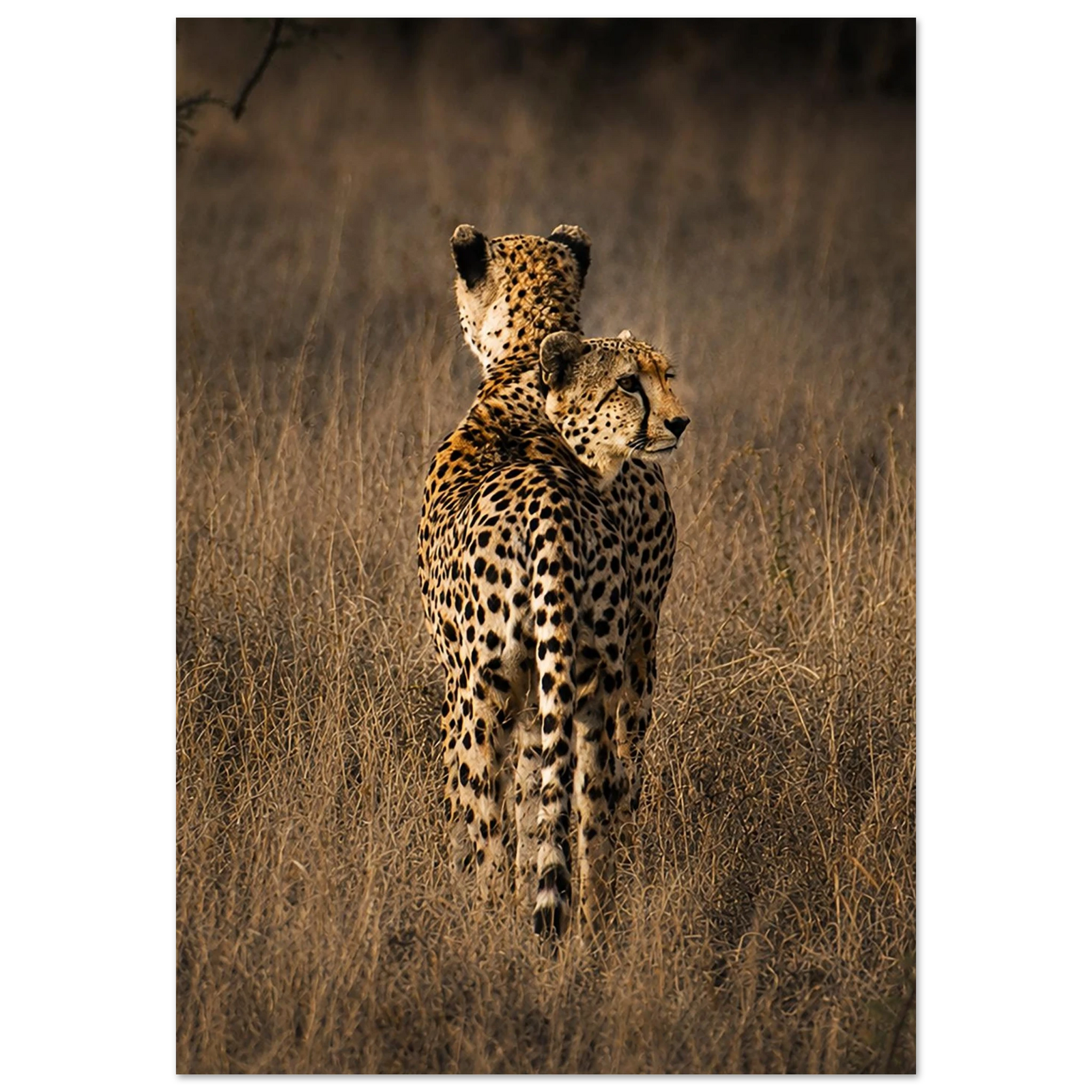
Available from $100, this piece is printed directly onto 3mm Aluminum DIBOND® with a matte, glare-free finish. The panel is UV- and moisture-resistant, and the hanging kit is included.
A cheetah photograph can work as a single statement piece or as part of a restrained gallery wall. Keep adjacent artwork simple so the animals remain the focus.
Zebras for high-contrast and graphic interiors
Zebra imagery is a natural choice for modern interiors. Stripes create movement, repetition, and contrast without requiring bright color. The result can feel more like graphic design than traditional animal wall art.
Zebra's Pattern Aluminum Print by Robert Moss – Wildlife Photography Wall Art focuses on the zebra stripe pattern captured in Zimbabwe. It is an effective counterpoint to softer landscapes and warmer rooms with wood, leather, or neutral textiles.
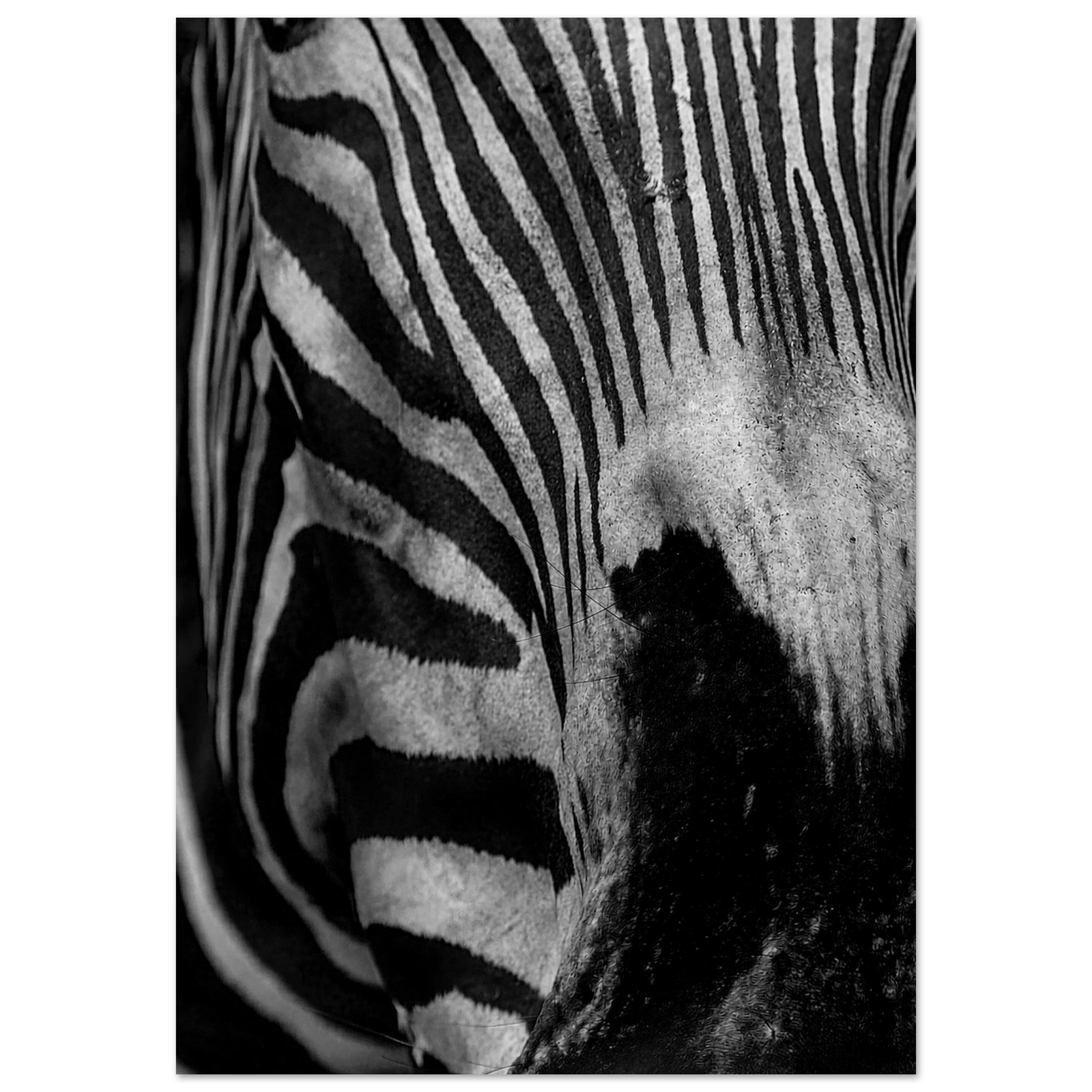
Available from $58, it is also an accessible entry point into fine art photography prints. The 3mm Aluminum DIBOND® panel has a direct UV print, matte glare-free finish, UV and moisture resistance, and included hanging hardware.
Use this type of image in a dining room, entryway, office, or narrow wall where strong lines can add structure. It also pairs well with minimalist furniture and black, white, tan, or charcoal decor.
Lions for large feature walls
A lion portrait has immediate authority. It can anchor a room on its own, particularly when the image is printed at a substantial size and placed where it can be viewed directly.
Male Lion Aluminum Wall Art – Relaxing Lion Wildlife Photography by Robert Moss features a male lion in South Africa. The calm subject and direct presence make it suitable for a living room, executive office, library, or professional reception area.
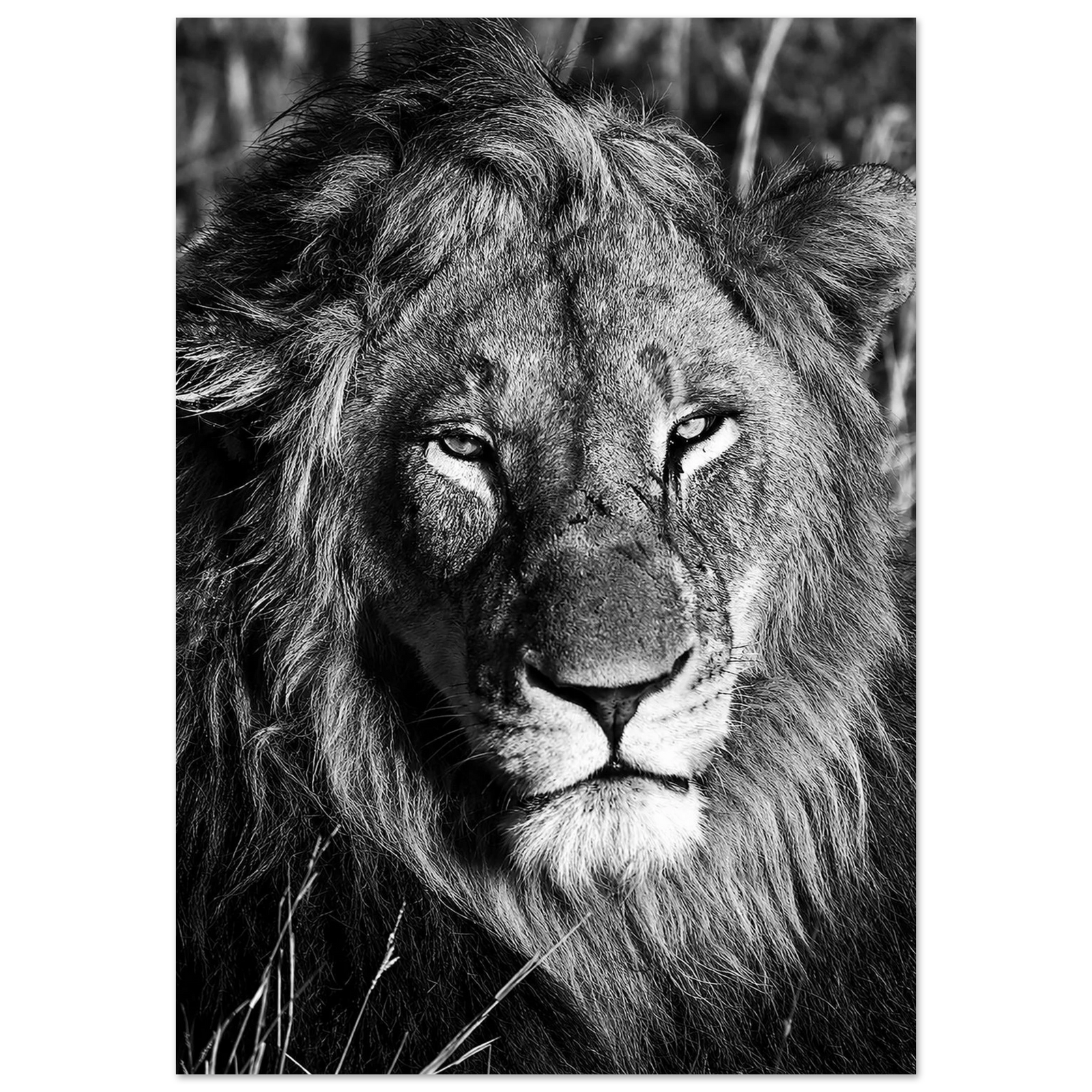
Available from $170, this is the strongest choice in this group for a statement wall. It is made on 3mm Aluminum DIBOND® with a direct UV print, matte glare-free finish, UV and moisture resistance, and included hanging kit.
Use a lion print when the wall needs one clear focal point. Avoid placing it among too many competing images. Let the subject carry the room.
Portrait or environmental composition?
The choice between a portrait and an environmental photograph affects both mood and placement.
Choose a portrait when:
- The wall is narrow or vertically oriented.
- The artwork will be viewed from a desk, chair, or hallway.
- You want the animal’s eyes, texture, and expression to lead the design.
- The room needs a defined focal point.
Portrait compositions are often effective in offices, bedrooms, entryways, and reading spaces. They can also be grouped in a simple three-piece arrangement with consistent spacing.
Choose an environmental scene when:
- You are filling a wide wall above a sofa or console.
- You want the room to feel more open.
- The landscape and negative space are as important as the animal.
- You prefer a quieter, more atmospheric design.
Environmental photography gives the eye room to move. It is especially useful in rooms with strong furniture lines or limited decorative detail.
Color or monochrome?
Color African wall art can reinforce the existing palette of a room. Warm grasses, forest greens, earth tones, and muted browns work well with natural materials and neutral upholstery.
Monochrome or high-contrast work is more flexible. Zebra patterns and black-and-white wildlife photography can support contemporary, industrial, Scandinavian, or minimalist interiors without competing with colorful furniture.
Choose color when you want atmosphere and warmth. Choose monochrome when you want structure and contrast.
How large should wildlife wall art be?
A practical starting point is to select artwork that measures approximately 60% to 75% of the width of the furniture below it.
For example:
- Above an 80-inch sofa, look for a total artwork width of roughly 48 to 60 inches.
- Above a 60-inch desk or credenza, consider a piece around 36 to 45 inches wide.
- On a narrow wall, use a smaller portrait format with clear space around it.
- On a feature wall, choose the largest size the room can support without crowding doors, windows, or adjacent furniture.
Moss Apparel’s available sizes include compact 8x12-inch formats and larger options reaching 28x40 inches, depending on the product. Use painter’s tape or paper to mark the proposed dimensions before ordering. Check the shape from the room’s main viewing position.
When hanging above furniture, leave approximately 4 to 8 inches between the bottom of the artwork and the furniture top. For a standalone piece, place the center near normal eye level.
Why choose aluminum for African wildlife photography?
All four featured pieces use Aluminum DIBOND®, a 3mm rigid panel designed for a clean, modern presentation. Each uses direct UV printing and a matte, glare-free finish. The panels are UV- and moisture-resistant, and each includes a hanging kit.
The matte surface is useful in bright rooms, offices, and spaces with windows because it reduces distracting reflections. The slim aluminum format also avoids the visual weight of a thick frame.
For a deeper explanation of the material, finish, and display benefits, read the Moss Apparel guide to aluminum metal prints for wildlife photography.
Placement and lighting
Place wildlife photography where the subject can be seen clearly from the room’s primary seating or working position.
Avoid strong reflections from windows and direct, harsh light aimed straight at the print. Soft directional lighting is usually more effective. A picture light, wall washer, or angled ceiling light can reveal detail without creating a bright hotspot.
Keep the artwork away from areas where doors, furniture, or decorative objects interrupt the composition. The strongest images need visual breathing room.
Where the money goes
Moss Apparel’s conservation model is simple: 10% of profits, donated quarterly to conservation partners. Each artwork lists its conservation details.
The result is wall art that combines original wildlife photography, durable materials, and a direct conservation commitment. Read more about our nonprofit partners on the nonprofit partnerships page.
Final checklist
Before you buy African wall art, confirm:
- The subject suits the room’s mood.
- The composition matches the wall orientation.
- The artwork is approximately 60% to 75% of the furniture width.
- The surface works with the room’s lighting.
- The finish supports your interior style.
- The artwork is available in the exact size you need.
- Your order qualifies for FREE SHIPPING OVER $60.
Choose the image first. Measure the wall second. Then select the format that gives the photograph enough space to work.
SHOP AFRICAN WILDLIFE FINE ART
About Robert Moss
For me, nature photography begins with respect. I believe the best wildlife photographs come from observing rather than interfering: allowing an animal, landscape, or moment to exist naturally and being patient enough to capture it as it unfolds.
My goal is not simply to photograph wildlife, but to create images that convey the character, beauty, scale, and vulnerability of the natural world. From wildlife encounters to remote landscapes and underwater environments, I am drawn to moments that remind us how extraordinary the wild still is.
I approach each photograph with the intention of keeping the scene authentic, preserving the natural behavior of the subject and the atmosphere of the place. That philosophy carries through to Moss Apparel and Moss Fine Art. The photographs are not only meant to be seen; they are intended to create a greater connection with the places and species they represent.
Conservation is at the heart of that mission because this approach becomes harder each year as the world changes, wildlife numbers decline, and natural spaces are threatened. Through Moss Apparel and Moss Fine Art, 10% of profits support nonprofit organizations working in wildlife conservation, habitat protection, and ocean restoration.
Robert Moss, Founder & Photographer, Moss Apparel


