


When I choose artwork for a home, office, or interior design project, I start with the room’s practical requirements. Where will the piece hang? How much light reaches the wall? Should the artwork feel traditional, contemporary, warm, or minimal?
Those decisions matter as much as the photograph itself.
This guide explains how to choose framed photography prints, including frame material, profile, paper, glazing, hanging hardware, size, and placement. I will also compare framed paper prints with unframed aluminum DIBOND® artwork so you can choose the right finish for your space.
Free shipping is available on purchases over $60. Explore the complete Moss Apparel Photo Collection to view current wildlife and landscape artwork.
Start with the frame material and color
For most wildlife and landscape photography, the frame should support the image rather than compete with it. Moss Apparel framed posters use either pine wood or, in one conservation-focused design, a black aluminum frame.
The pine wood frame options include:
- Black
- White
- Natural
- Dark brown
Black gives wildlife photography a crisp gallery profile. White keeps the presentation light and understated. Natural pine works well with organic interiors, while dark brown adds warmth and pairs easily with leather, wood, and traditional furnishings.
The Bald Eagle Framed Poster – Grand Tetons Wildlife Photography by Robert Moss is a strong example of this flexible format. The photograph was captured in the Grand Tetons, Wyoming, and the framed poster is available with a durable pine wood frame in black, white, natural, or dark brown.
It is offered in 60x80 cm / 24x32 inches, 70x70 cm / 28x28 inches, and 70x100 cm / 28x40 inches. The product includes a professional hanging kit, so it is ready for display.
SHOP THE BALD EAGLE FRAMED POSTER
Choose a gallery-style frame profile
Frame thickness and width affect how the artwork sits on the wall. A narrow profile keeps attention on the photograph. A slightly thicker profile gives the piece more visual weight and helps it hold its place above larger furniture.
Moss Apparel’s pine framed posters use a gallery-style profile that is approximately 20–25 mm thick and 10–14 mm wide.
The proportions are clean and modern without becoming overly decorative. That makes them suitable for living rooms, bedrooms, offices, hallways, and hospitality spaces.
For interior designers planning a group of framed art prints, consistency is usually the easiest approach. Use the same frame color and profile across several works when you want a coordinated gallery wall. For a more collected look, combine black and natural wood while keeping the artwork’s scale and subject matter balanced.
Compare paper and print finishes
The paper finish changes how the photograph behaves under indoor lighting.
The Hammerhead Shark Framed Poster – Bimini Bahamas Wildlife Photography by Robert Moss uses 200 gsm / 80 lb heavyweight matte paper. The paper is FSC-certified and has a smooth, non-reflective surface.
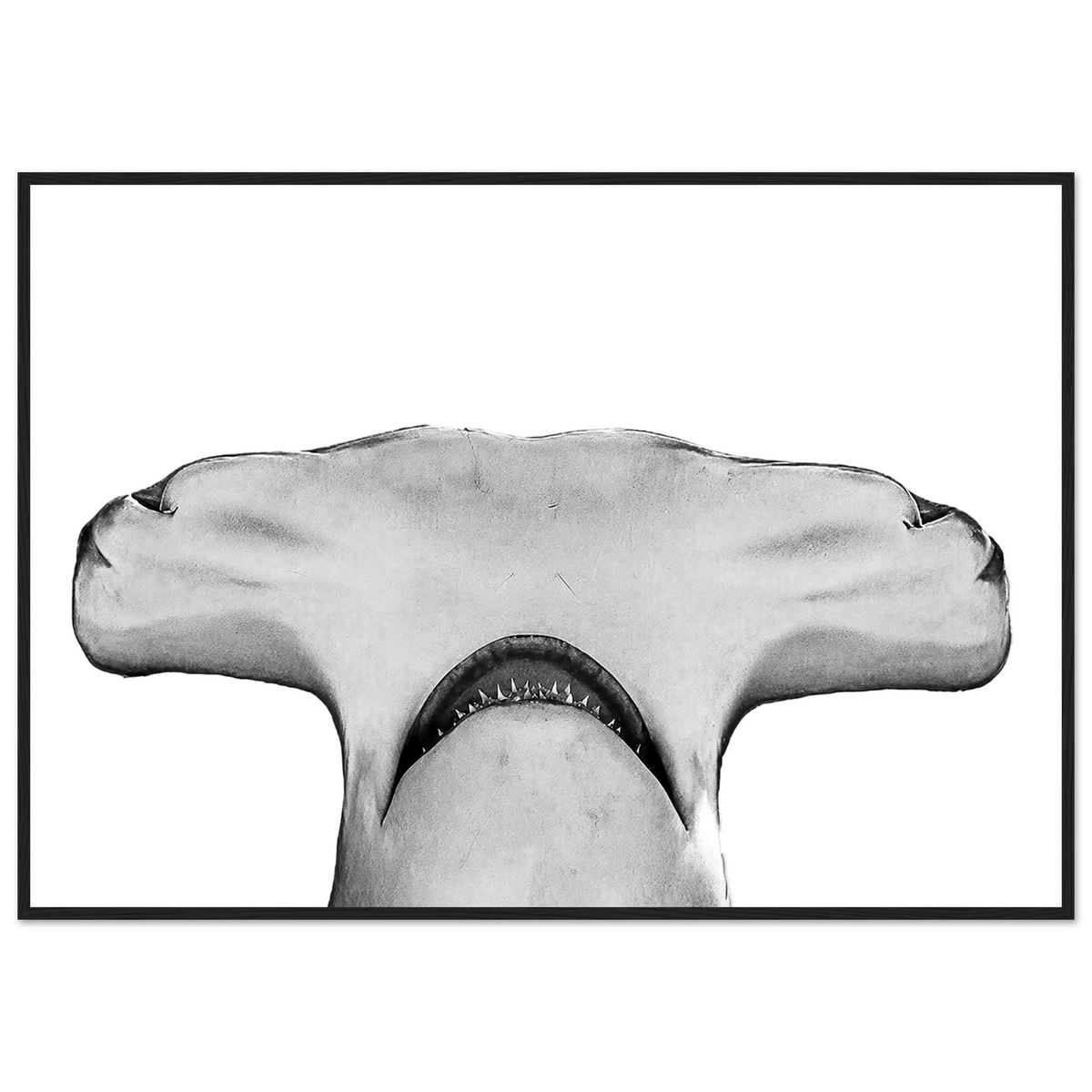
The matte finish is a practical choice when the print will be viewed near windows, overhead lighting, or seating areas where reflections could become distracting. The product includes a pine wood frame, shatterproof plexiglass, and ready-to-hang hardware. Available sizes range from 21x29.7 cm / 8x12 inches to 70x100 cm / 28x40 inches.
SHOP THE HAMMERHEAD SHARK FRAMED POSTER
The Vermont Mountain Morning Framed Poster by Robert Moss - Fine Art Wall Decor also uses 200 gsm / 80 lb FSC-certified matte paper. The image shows mist-covered mountains at dawn, making it a natural choice for quiet living rooms, bedrooms, reading areas, and nature-inspired interiors.

This design is available with a dark wood frame or black frame. It includes shatterproof plexiglass and a professional hanging kit. The available sizes are 21x29.7 cm / 8x12 inches, 40x60 cm / 16x24 inches, 60x90 cm / 24x36 inches, and 70x100 cm / 28x40 inches.
Some Moss Apparel framed posters use 170 gsm / 65 lb FSC-certified semi-gloss paper instead. This finish is designed for vibrant, true-to-life color and detail. The key difference is simple: matte paper reduces surface reflection, while semi-gloss paper gives the image a brighter, more polished appearance.
The Gray Wolf Framed Poster – Wildlife Photography by Robert Moss is a good example of this 170 gsm semi-gloss option. I photographed this gray wolf in Wyoming, and the darker tones in a gray wolf portrait are well suited to a semi-gloss surface that holds detail and depth cleanly.
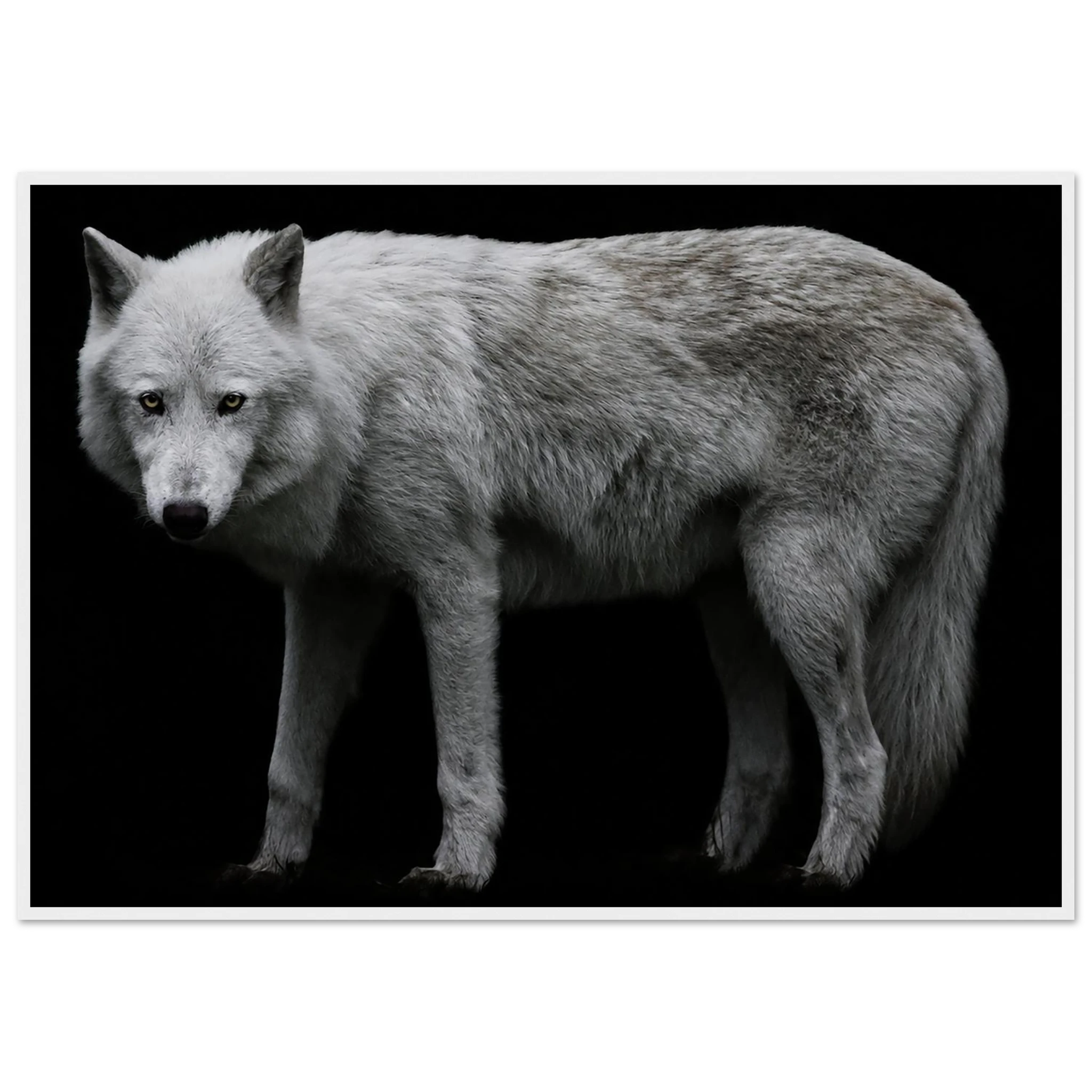
This framed poster uses a pine wood frame, 170 gsm / 65 lb FSC-certified semi-gloss paper, shatterproof high-clarity plexiglass, and included mounting hardware. It is available in black, white, natural, and dark brown frame finishes, with sizes 60x90 cm / 24x36 inches and 70x100 cm / 28x40 inches, starting from $240. For the conservation element, 10% of profits from this photograph go to the WYldlife Fund.
SHOP THE GRAY WOLF FRAMED POSTER
The separate Fine Art Poster format uses 200 gsm FSC-certified matte paper and 12-color giclée printing. That is a different format from the ready-to-hang framed posters discussed here, so check the details for the specific piece before ordering.
Consider glazing and protection
Every framed product featured here uses shatterproof plexiglass. This protects the paper surface while keeping the finished artwork lightweight and practical for everyday interiors.
Plexiglass is especially useful in busy homes, offices, hospitality spaces, and rooms where traditional glass would be less practical. It also helps protect the print from dust and accidental contact.
These frames use plexiglass rather than museum glass, so avoid direct, intense sunlight wherever possible. Place framed photography prints on a wall with stable indoor conditions, and clean the plexiglass according to the care guidance provided with the order.
When black aluminum is the better choice
The Bimini Shark Lab Conservation Framed Poster – Great Hammerhead Marine Art is where framed metal wall art fits within this collection.
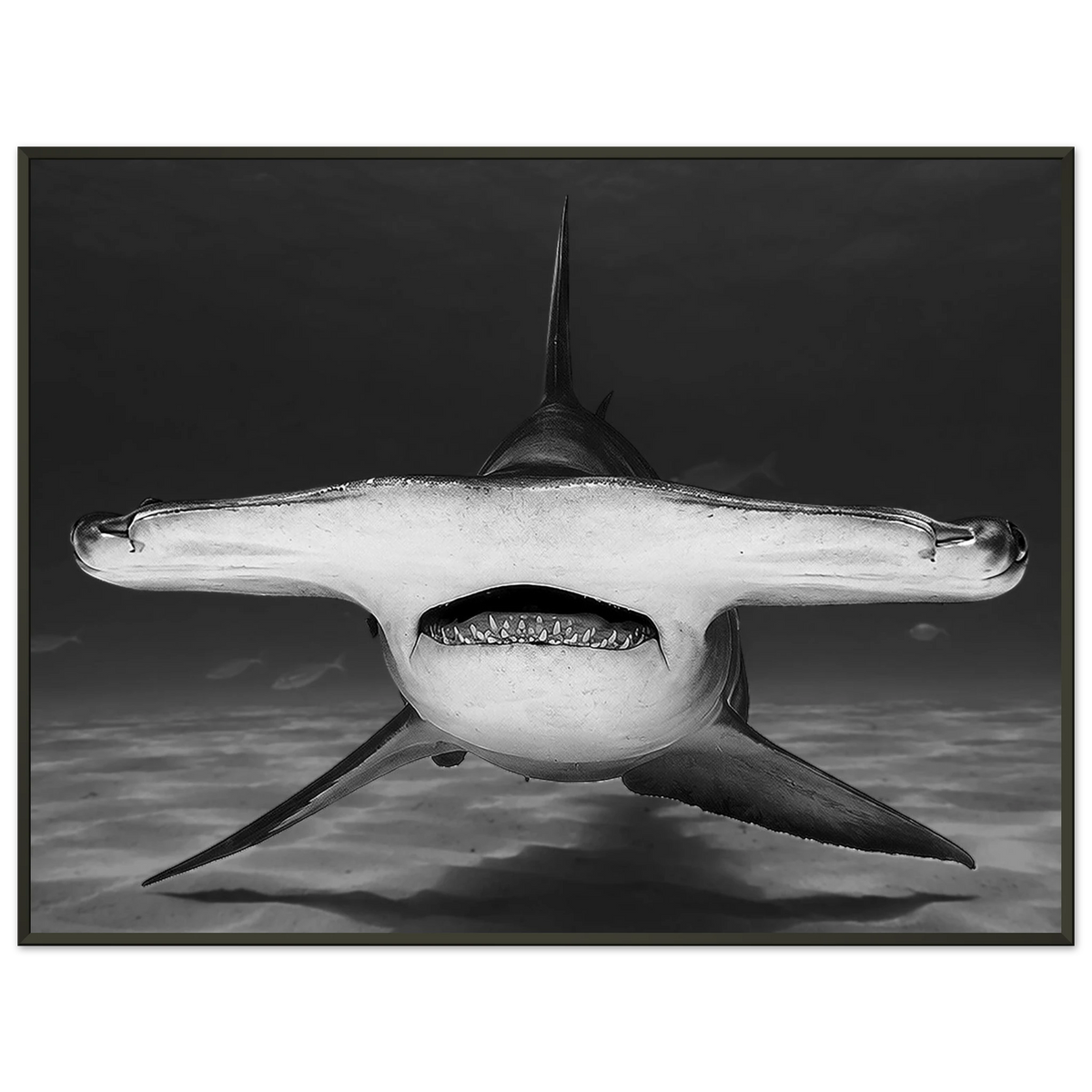
This product uses a durable, lightweight black aluminum frame with a polished black finish. The profile is 20 mm thick and 10 mm wide. It contains 170 gsm / 65 lb FSC-certified semi-gloss paper behind shatterproof plexiglass.
That distinction matters. It is a framed paper artwork with an aluminum frame, not an aluminum print. The black frame gives it a more contemporary, precise appearance than the pine wood options. It is available in 21x29.7 cm / 8x12 inches and 60x80 cm / 24x32 inches.
The design supports the Bimini Shark Lab’s shark conservation mission. At Moss Apparel, 10% of profits support conservation work.
SHOP THE BIMINI SHARK LAB CONSERVATION FRAMED POSTER
Framed paper prints versus unframed aluminum DIBOND®
If glare, durability, and room placement are your main concerns, compare framed paper artwork with an unframed aluminum DIBOND® print.
The Caribbean Black Tip Reef Shark Aluminum Photograph by Robert Moss is printed directly onto a 3 mm Aluminum DIBOND® panel.

Its direct UV print has a matte, glare-free finish. The panel is rigid, lightweight, UV-resistant, and moisture-resistant. A professional hanging kit is included, but there is no traditional outer frame.
Choose framed paper artwork when you want:
- A finished, traditional art presentation
- A visible wood or aluminum border
- A softer relationship with classic interiors
- The protection of plexiglass
- A coordinated gallery wall
Choose unframed DIBOND® when you want:
- A sleek contemporary profile
- A rigid, durable panel
- Matte, glare-free direct printing
- Strong performance in modern offices or minimalist rooms
- A display that puts the image edge-to-edge
For living rooms, bedrooms, and traditional interiors, framed prints often feel more integrated with the furniture. For modern offices, kitchens, commercial spaces, and minimalist rooms, unframed aluminum can provide a cleaner architectural appearance.
SHOP THE CARIBBEAN BLACK TIP REEF SHARK ALUMINUM PHOTOGRAPH
Select the right size and placement
Measure the wall before ordering. Also measure the furniture below it. The artwork should have enough surrounding space to remain visually clear.
Use smaller formats such as 21x29.7 cm / 8x12 inches for:
- Hallways
- Shelves
- Entryways
- Bedrooms
- Grouped gallery walls
Use 40x60 cm / 16x24 inches and 60x90 cm / 24x36 inches for:
- Above a desk
- Above a console
- Smaller living room walls
- Office focal points
Use 70x100 cm / 28x40 inches for:
- Large living room walls
- Above a sofa
- Hospitality interiors
- Standalone statement displays
Wildlife portraits usually benefit from direct viewing distance. Landscape images can work well above long furniture because their horizontal compositions reinforce the width of the room.
Shop framed photography prints
I create Moss Apparel artwork for people who want real wildlife and landscape photography in a finished, functional format. Whether you choose pine wood, black aluminum, matte paper, semi-gloss paper, plexiglass, or unframed DIBOND®, the construction details are listed for each piece.
Browse the full Moss Apparel Photo Collection to compare framed art prints, framed landscape art, framed nature wall art, wildlife photography, and aluminum wall art.
SHOP ALL FRAMED PHOTOGRAPHY PRINTS
Free shipping is available on purchases over $60. 10% of profits support conservation-focused work.
About Robert Moss
For me, nature photography begins with respect. I believe the best wildlife photographs come from observing rather than interfering: allowing an animal, landscape, or moment to exist naturally and being patient enough to capture it as it unfolds.
My goal is not simply to photograph wildlife, but to create images that convey the character, beauty, scale, and vulnerability of the natural world. From wildlife encounters to remote landscapes and underwater environments, I am drawn to moments that remind us how extraordinary the wild still is.
I approach each photograph with the intention of keeping the scene authentic, preserving the natural behavior of the subject and the atmosphere of the place. That philosophy carries through to Moss Apparel and Moss Fine Art. The photographs are not only meant to be seen; they are intended to create a greater connection to the places and species they represent.
Conservation is at the heart of that mission because this approach becomes harder each year as the world changes, wildlife numbers decline, and natural spaces are threatened. Through Moss Apparel and Moss Fine Art, 10% of profits support nonprofit organizations working in wildlife conservation, habitat protection, and ocean restoration.


